
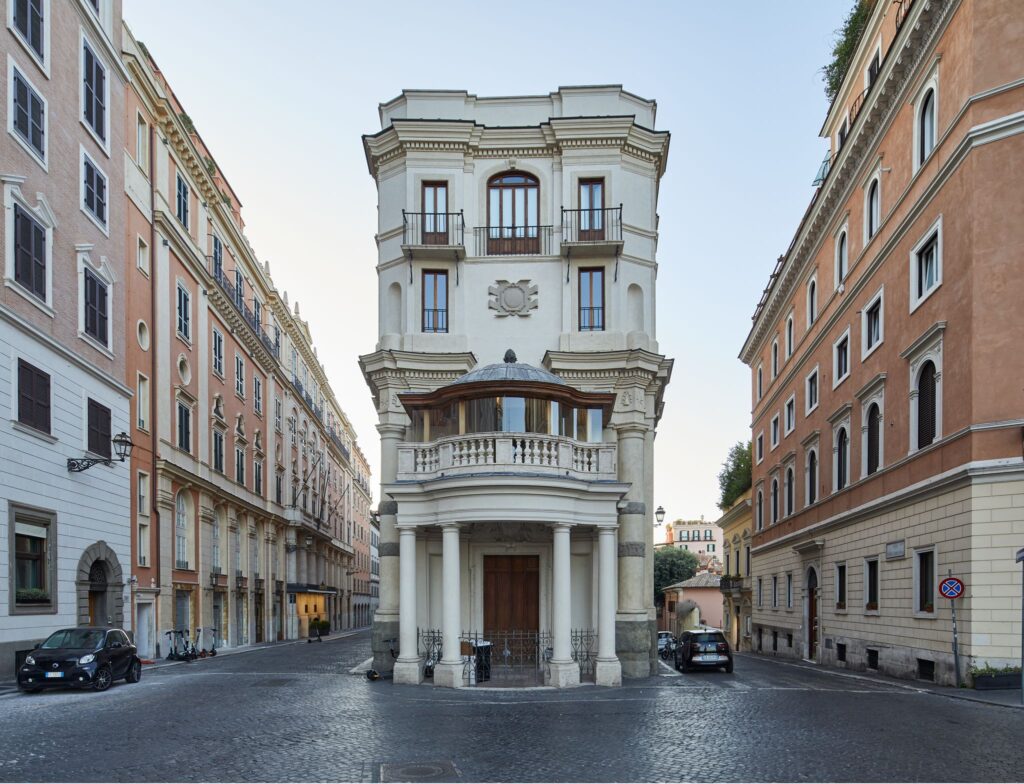
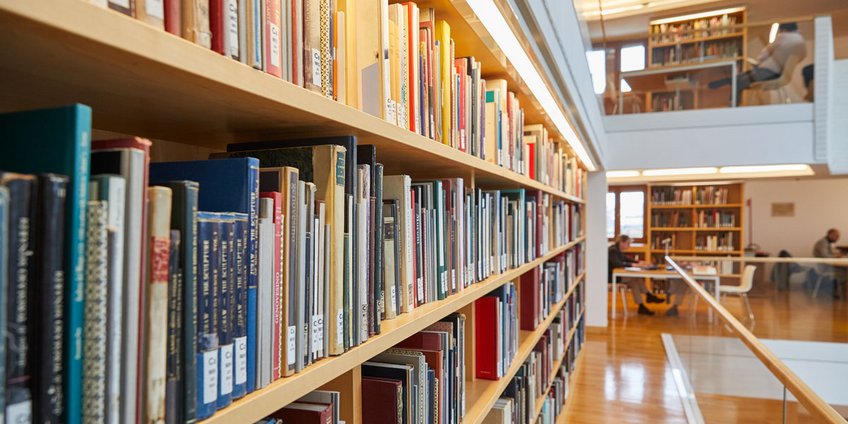
Based in Rome, the Bibliotheca Hertziana is one of the institutes in the Humanities and Social Sciences Section of the Max Planck Society, Germany’s most successful research organization. The institute was opened in 1913 under the umbrella of the Kaiser Wilhelm Society (since 1948 Max Planck Society) which had been founded only two years earlier. Situated in central Rome, near the famous Spanish Steps, the Bibliotheca Hertziana owes its existence to the generosity of Henriette Hertz (1846–1913), who bequeathed Palazzo Zuccari to the Kaiser Wilhelm Society as the seat of the new research institute. The institute’s excellent library and comprehensive photographic collection, as well as its proximity to works of art, monuments, archives and museums, conservation authorities, universities and international institutions in Rome, make the Hertziana one of the world’s most prestigious research institutes for Italian and especially Roman history of art.
The Photographic Collection originates from a collection of some 20,000 photographs compiled by Henriette Hertz and Ernst Steinmann, the first director of the Bibliotheca Hertziana. Today, the collection includes more than 1.5 million positives, negatives and digital images. The collection focuses on Roman and Italian topography, Italian artists and drawings. The latter include Old Master drawings, architectural drawings and drawings after antiquities as well as two special collections: the Corpus Photographicum of Drawings (Corpus Gernsheim) and the Corpus of Italian Drawings 1300–1600 (Corpus Degenhart-Schmitt). The online catalogue currently contains approximately 500,000 photographs ranging from architecture to paintings, drawings, sculpture, applied arts and more. It includes all photographs added to the collection since 1995 as well as a large part of the holdings acquired before that date. Some of the photographs from other institutions and external photographers are protected by copyright and can only be accessed on the Bibliotheca Hertziana intranet. The collection is continuously expanded through photographic campaigns, systematic purchases and the acquisition of archives, furthermore by photographic estates of renowned art historians (Richard Krautheimer, Hanno Hahn, Heinrich Mathias Schwarz, Hanno-Walter Kruft, Hans Werner Schmidt, Francesco Negri Arnoldi, Matthias Winner, Joachim Poeschke and others). The Photographic Collection also organizes the annual “Gernsheim Study Days”, which focus on various aspects of drawings. Other conferences and workshops focus on the role and appearance of photography from the 19th to the 21st century.